Natural cleaning 2.0
Nourish and Cleanse - at the Same Time
Body care should never be about stripping the skin or masking it with synthetic fragrances. It should be about supporting it - with ingredients that are real, natural, and made to work in harmony with our bodies.
A well-made bar soap does exactly that. As it cleans, the naturally occurring glycerin and nourishing oils protect the skin’s barrier, leaving it balanced, soft, and truly clean - not tight or dehydrated.

Every bar of soap from PATA is cured for 6 weeks to 12 months, depending on the oils used. Slow curing makes the soap harder, milder, longer-lasting, and gentler on even the most sensitive skin.
Why choose a bar, not a bottle

Solid soap is one of the simplest and most sustainable choices you can make.
It contains no added water, no plastic packaging, and no preservatives.
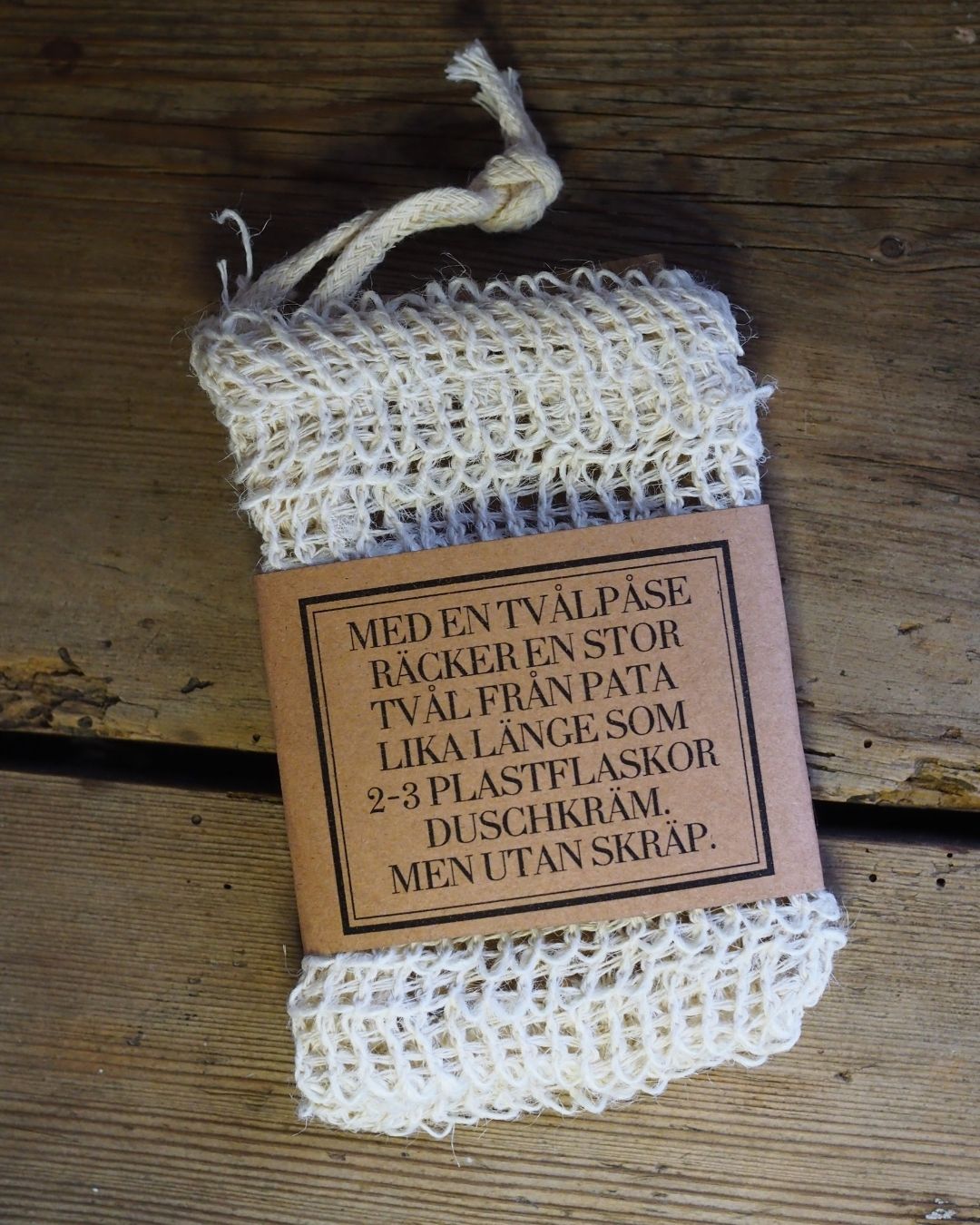
A well-cured bar lasts far longer than a bottle of shower gel, and it’s far gentler - especially for dry or sensitive skin.
And because it’s pure soap, without microplastics or synthetics, I use it when I swim in the outdoors too - lakes, seas, and rivers included.
Thoughtfully Sourced Ingredients
Good soap begins long before the mold is poured. Wherever possible, I source ingredients locally, or from people and farms that I personally know - lard from free-range pigs raised just south of Kalmar in Voxtorp, and sometimes from Mangalica pigs on small farms outside of Berlin.

Many of my soaps include Lard because my experience is that Lard is one of the most skin-loving ingredients you can use in soap. Its fatty-acid profile is remarkably similar to the natural oils in human skin, which makes lard-based soaps incredibly gentle, conditioning, and well tolerated - even for sensitive or dry skin. It creates a dense, creamy lather and a bar that is long-lasting, mild, and deeply nourishing. Traditional soapmakers knew this for generations, and modern science simply confirms what they already understood: lard makes beautiful, balanced soap.
All my soaps include olive oil. For the olive oil, I go directly to a farm in Puglia known for its high-polyphenol harvest - oils naturally rich in antioxidants that are wonderful for the skin, supporting elasticity, softness, and overall skin resilience.

I use only real, natural scents from essential oils in my soap bars. No synthetic perfumes, no artificial colors - only clays, roots, botanicals, and infusions I make myself.
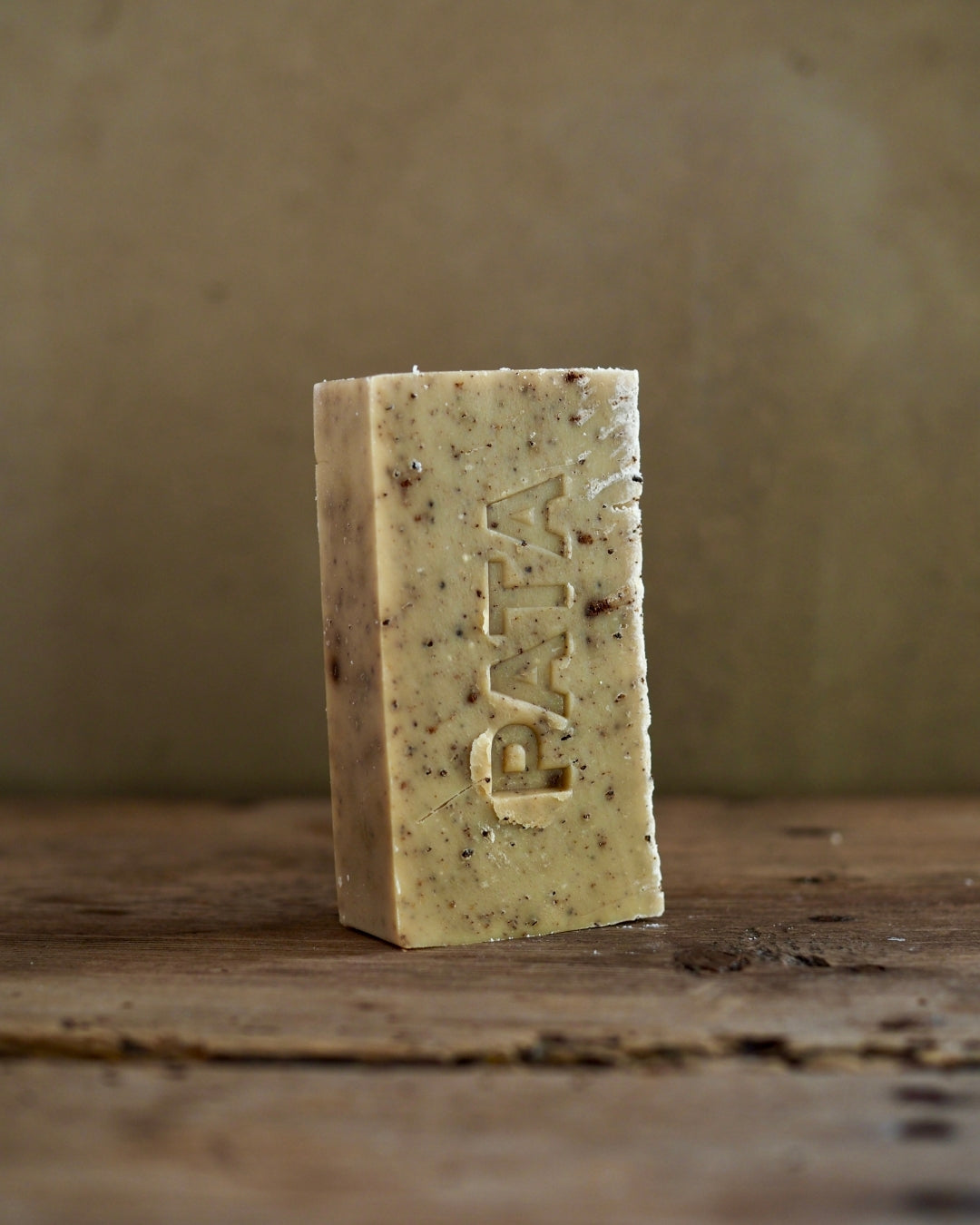
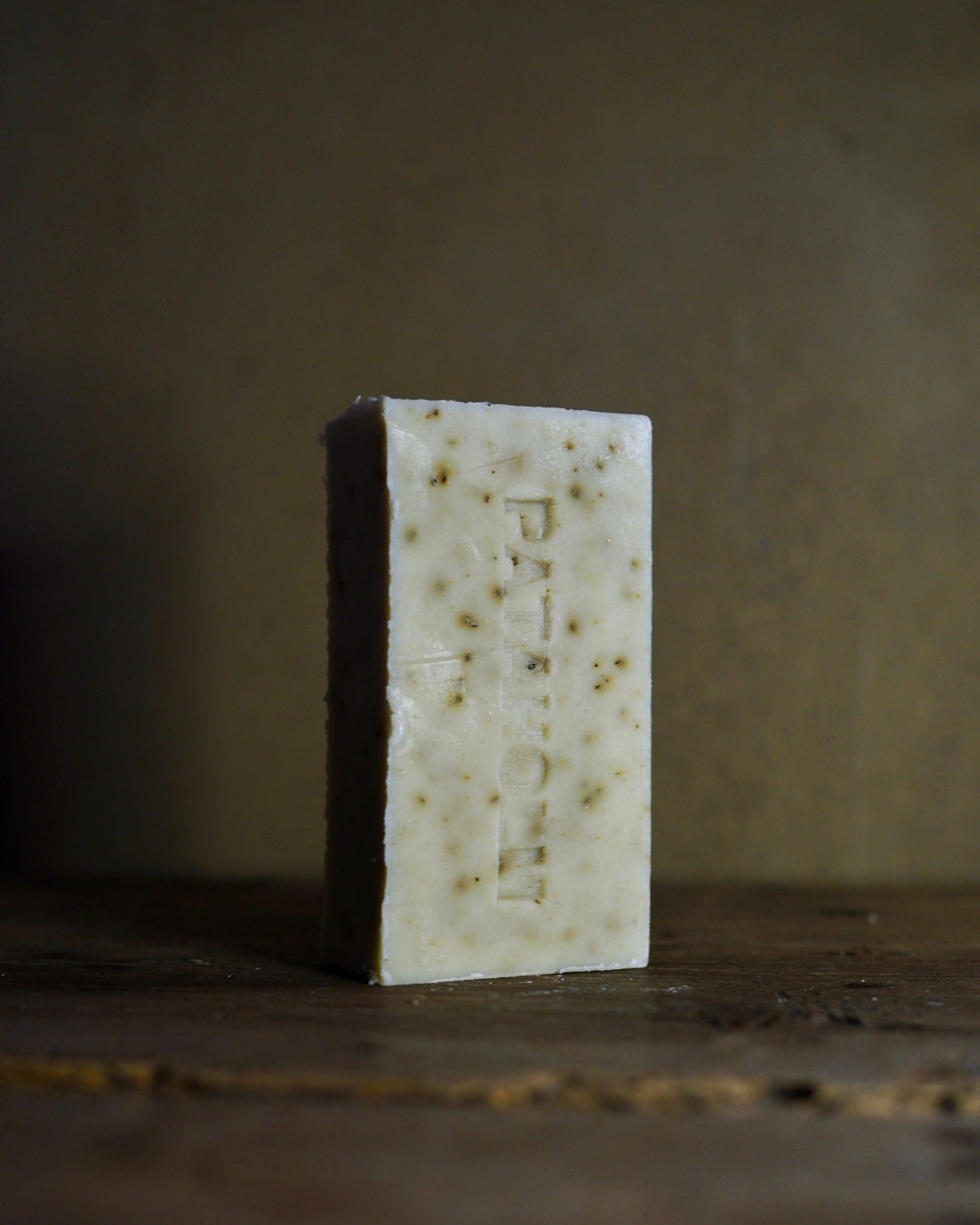
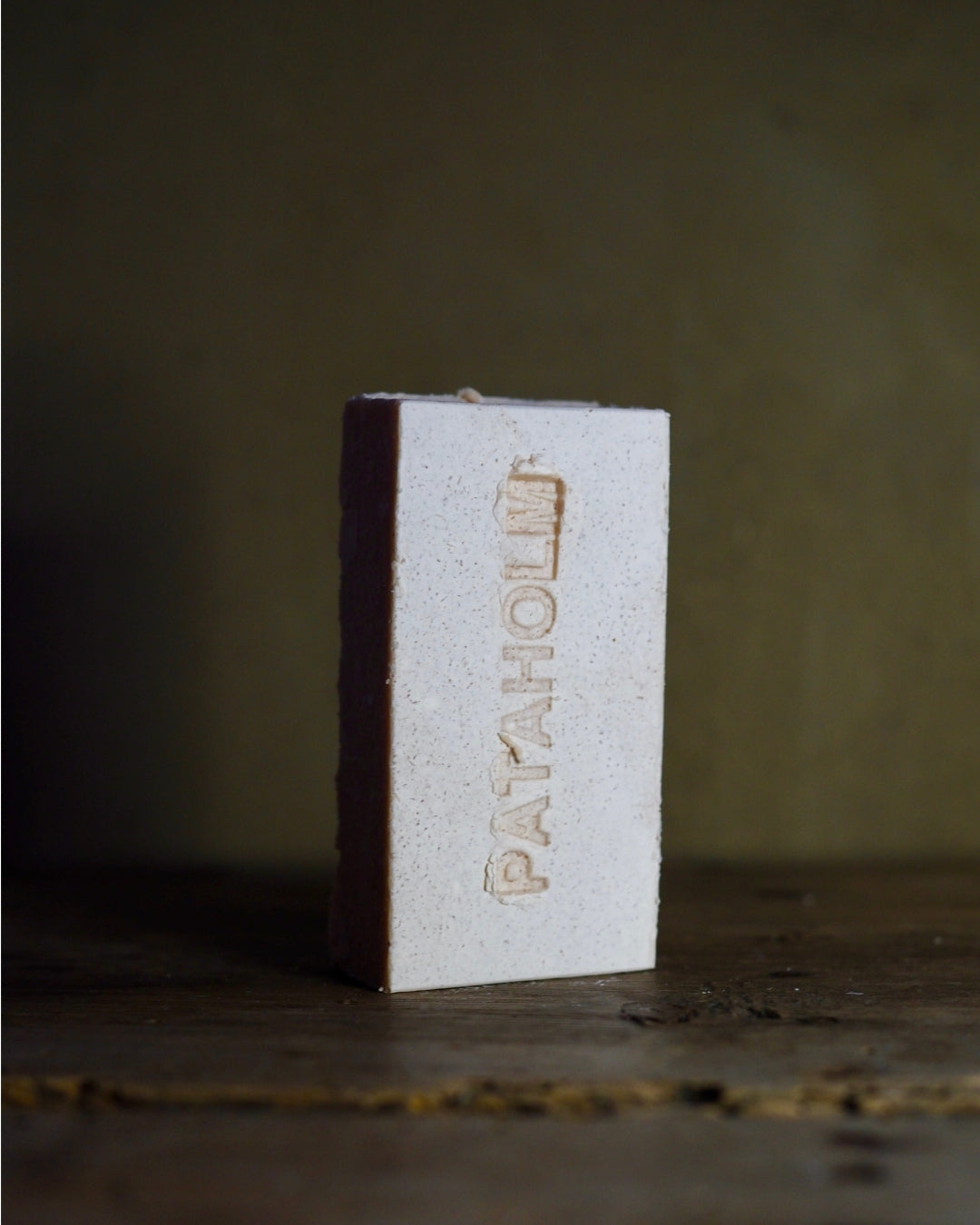
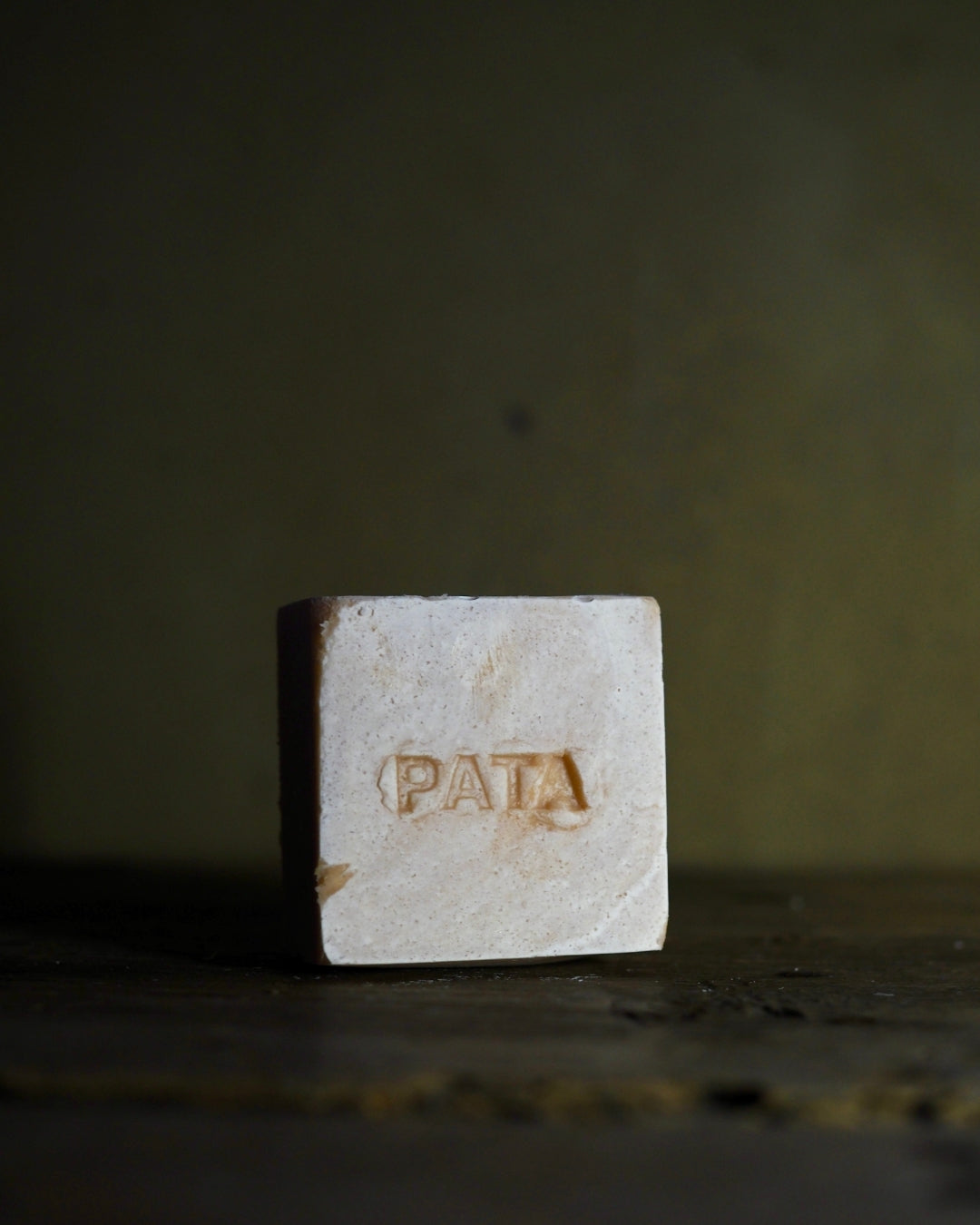
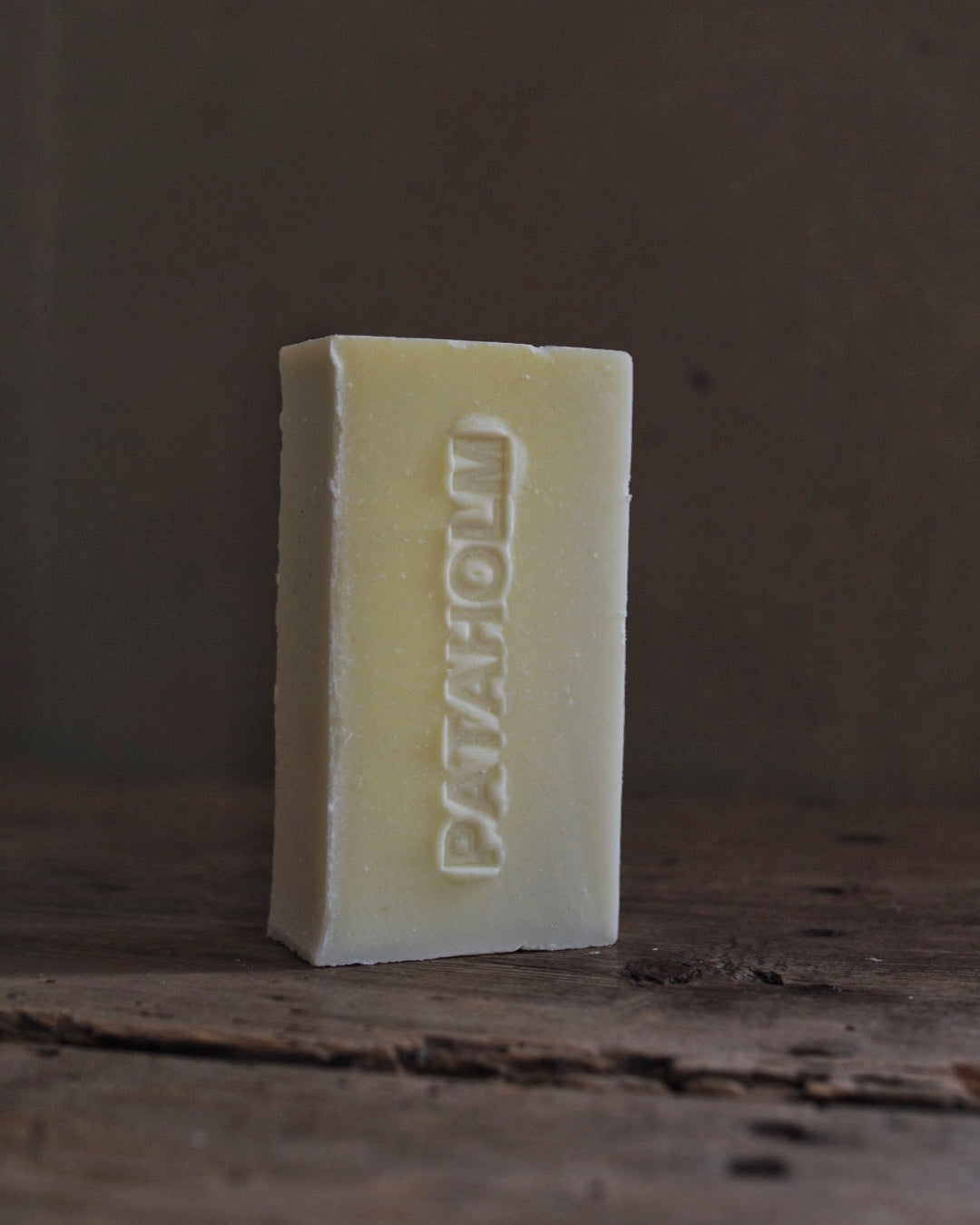
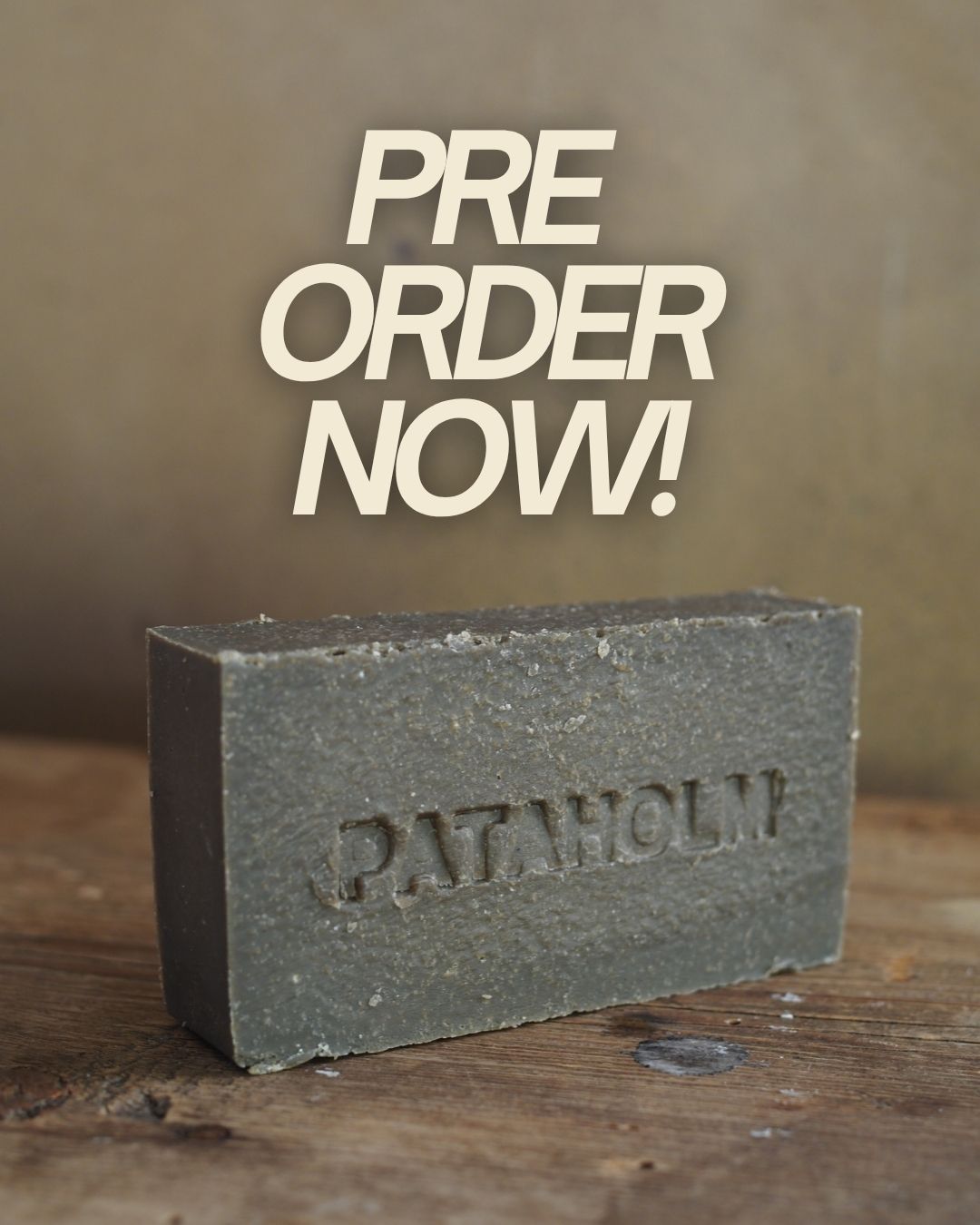
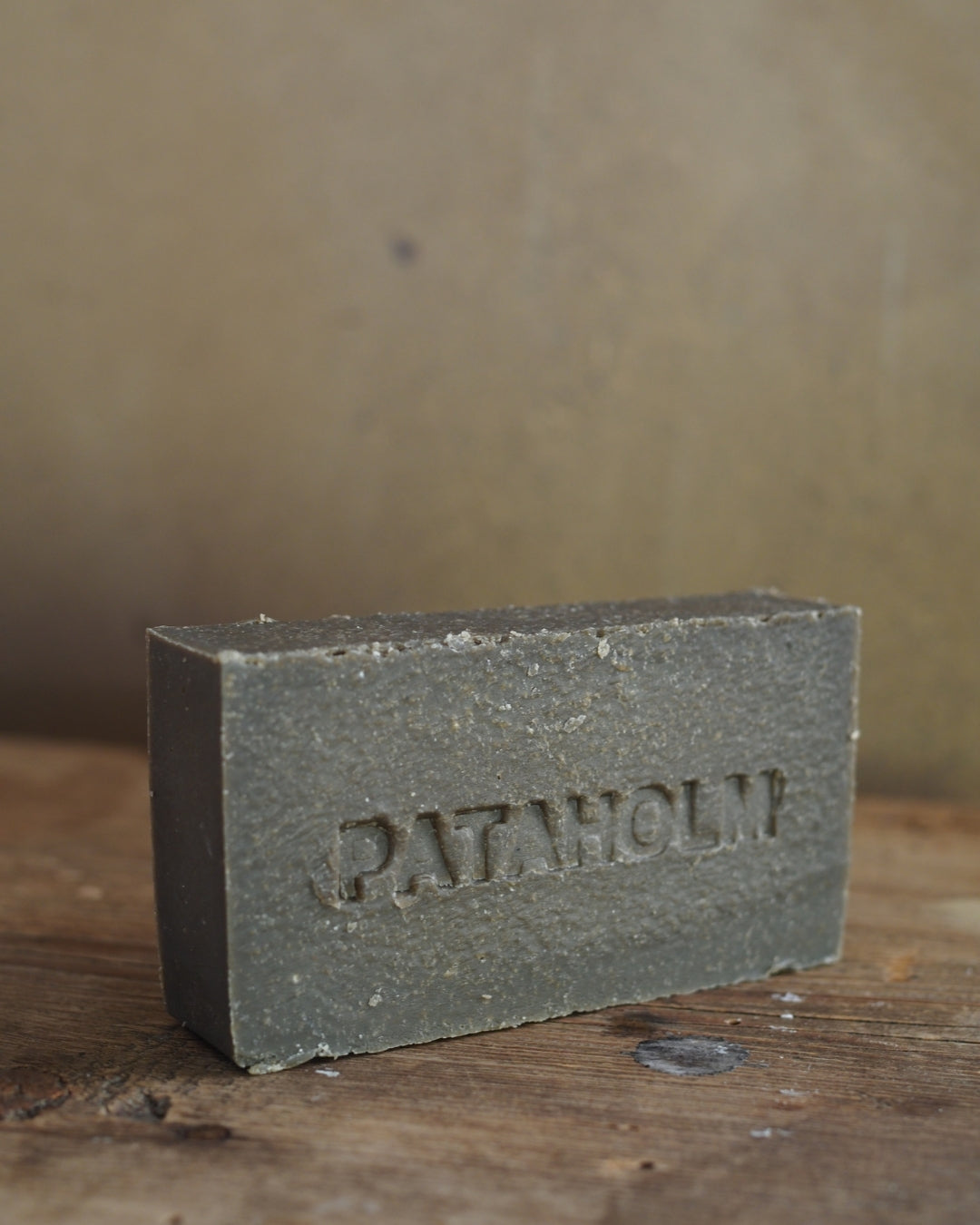
Every bar is hand-crafted by me, shaped and stamped by hand. No two soaps will ever look the same; some say PATA, others say PATAHOLM - each one carrying the mark of the hands that made it.
Please note: The color intensity of some natural colorants (e.g., Alkanet, Rhubarb Root for example) may fade over time, which can cause a slight change in hue. This does not constitute a product defect or a reason for a complaint. Another detail you might notice is a white dust on your soap. It is called soda ash, and can accure in the curing process. I find this feature beautiful, and a sign of handcraft, and I do not remove it.

why soap?
As a daughter of two chemists, I always enjoy a good experiment. As I was working on making the perfect home cleaner, I soon realised that I should be making my own body soap too (I've always tend to have dry skin, and it does not get better with age).
From my experience with The Bread Exchange, I soon realised that what my skin needed wasn’t more product - it was better ingredients and going back to basic in the process of production. Cleaner, simpler, slower. Just like Bread making had taught me.
That journey became PATAHOLM: body care made with materials that respect the skin, respect the land, and age beautifully - just like the things we choose to care for.
Great care takers for the skin