HOW WE CLEAN WOOD OUTDOORS
In the Nordics, we have a traditional way of cleaning outdoor wood - like terraces, garden furniture, and steps - with linseed oil soap and water.
No oiling, no varnish, no harsh chemicals.
The soap gently lifts dirt while its natural fatty acids nourish and protect the wood fibers. Over time, this creates a breathable surface that repels moisture and dirt, yet allows the wood to age naturally and evenly.
It’s simple: sweep, scrub with warm soapy water, and let it dry. The result is clean, soft wood with a beautiful, matte surface that only gets better with time.

WHY PATA SOAP, and not oil?
Most people reach for oil when it’s time to care for their wooden terrace. But in the Nordic tradition, there’s another way - one that keeps the wood beautiful, soft, and naturally weather-resistant without sealing it under a sticky layer. It’s called såpskurning, or soap cleaning.
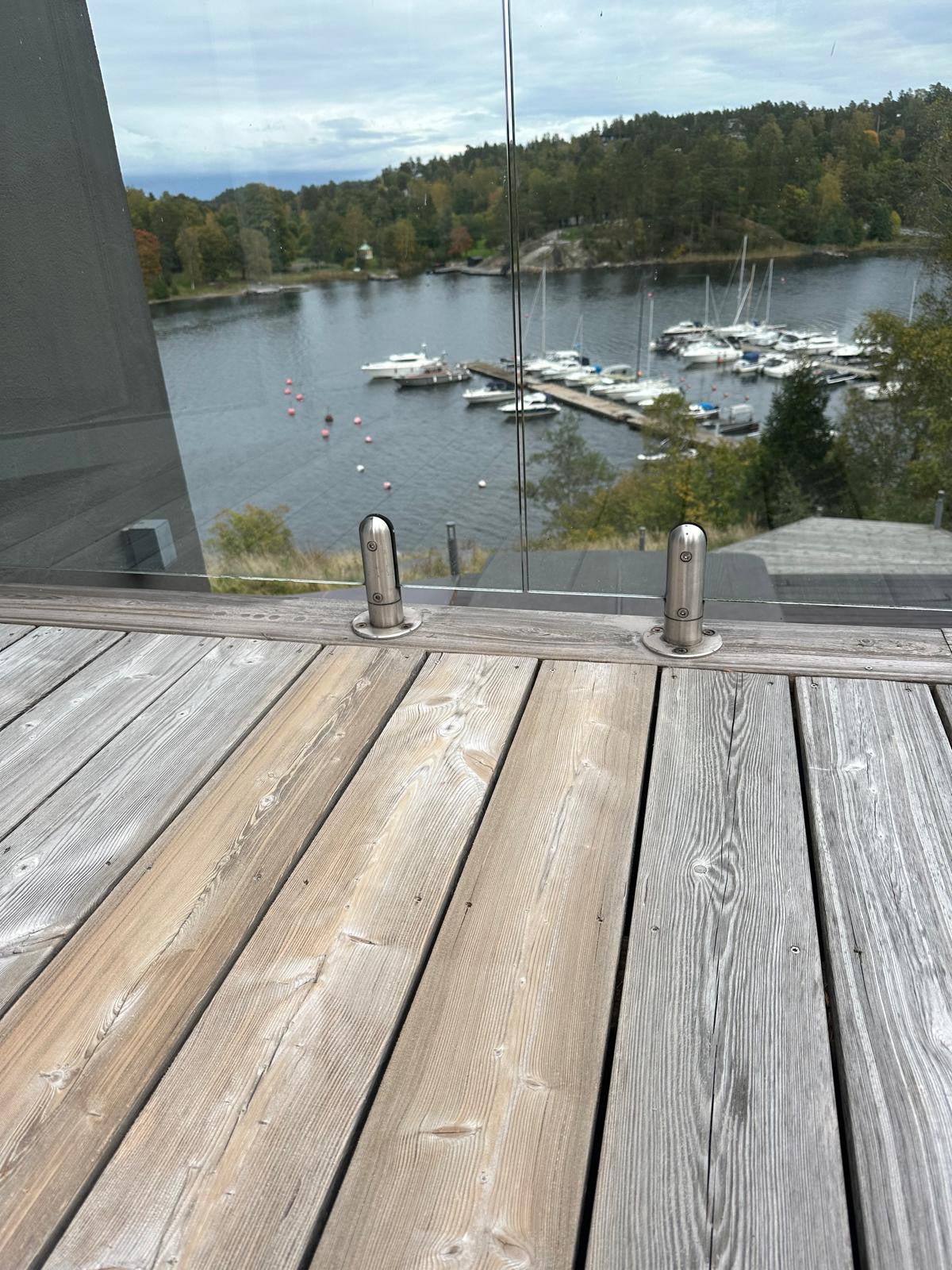
When you clean your terrace (or any wooden surface outside, like our jetty here in the picture) with linseed oil soap, the natural fatty acids in the soap penetrate the wood fibers, gently nourishing and protecting them from within. Over time, this builds up a subtle, breathable surface that repels dirt and moisture - while allowing the wood to age gracefully and evenly in the open air.
Unlike oil, which can darken wood, attract dirt, and eventually flake or become patchy, soap cleaning preserves the natural tone and texture of the wood. The surface stays light, matte, and easy to maintain - no sanding, stripping, or re-oiling needed.
Soap cleaning is also kinder to nature: no solvents, no harsh chemicals - just pure, linseed soap made from biodegradable linseed oil, and water.
A beautiful, low-maintenance way to let your terrace stay exactly as it should be: alive, natural, and weathered with dignity.
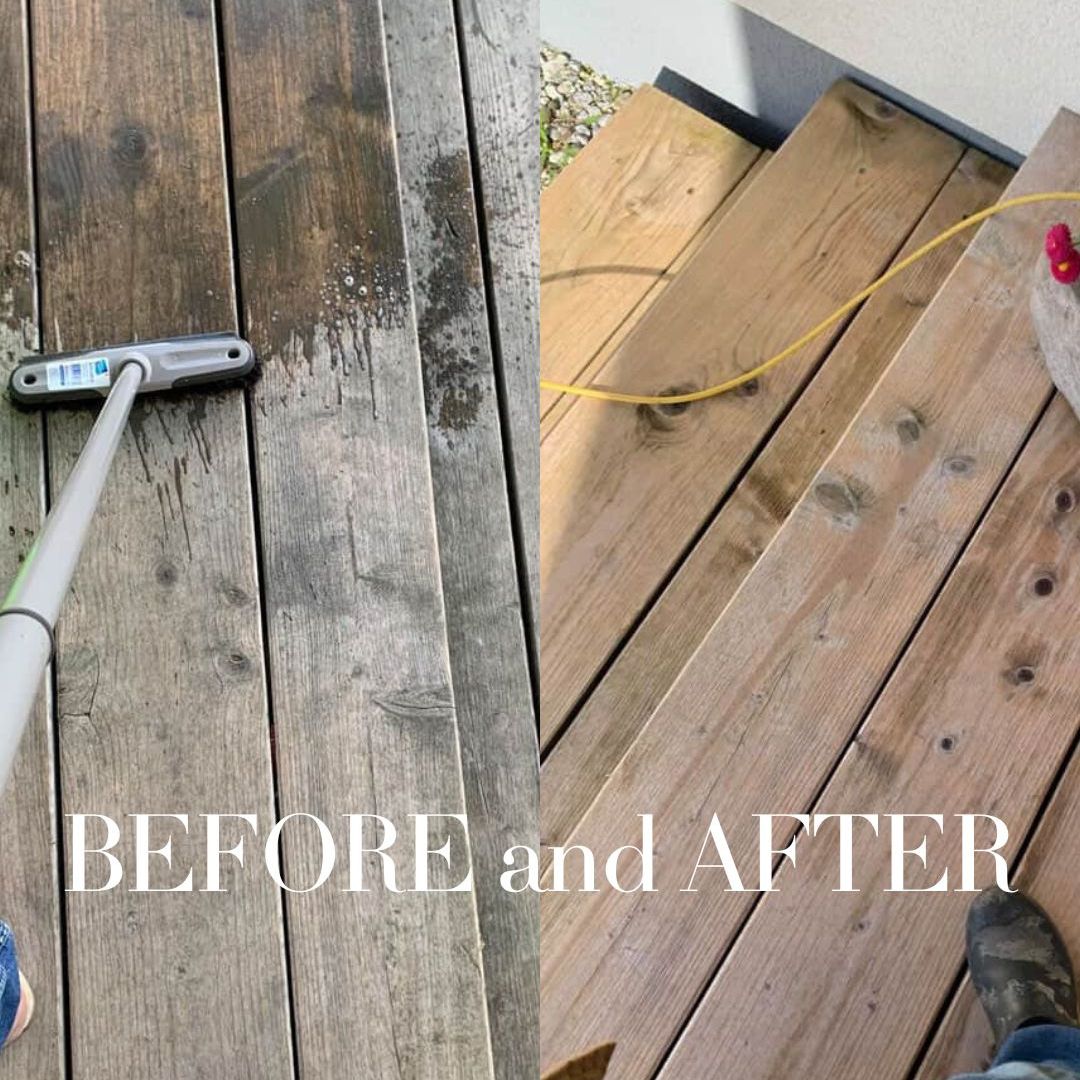
Before/after
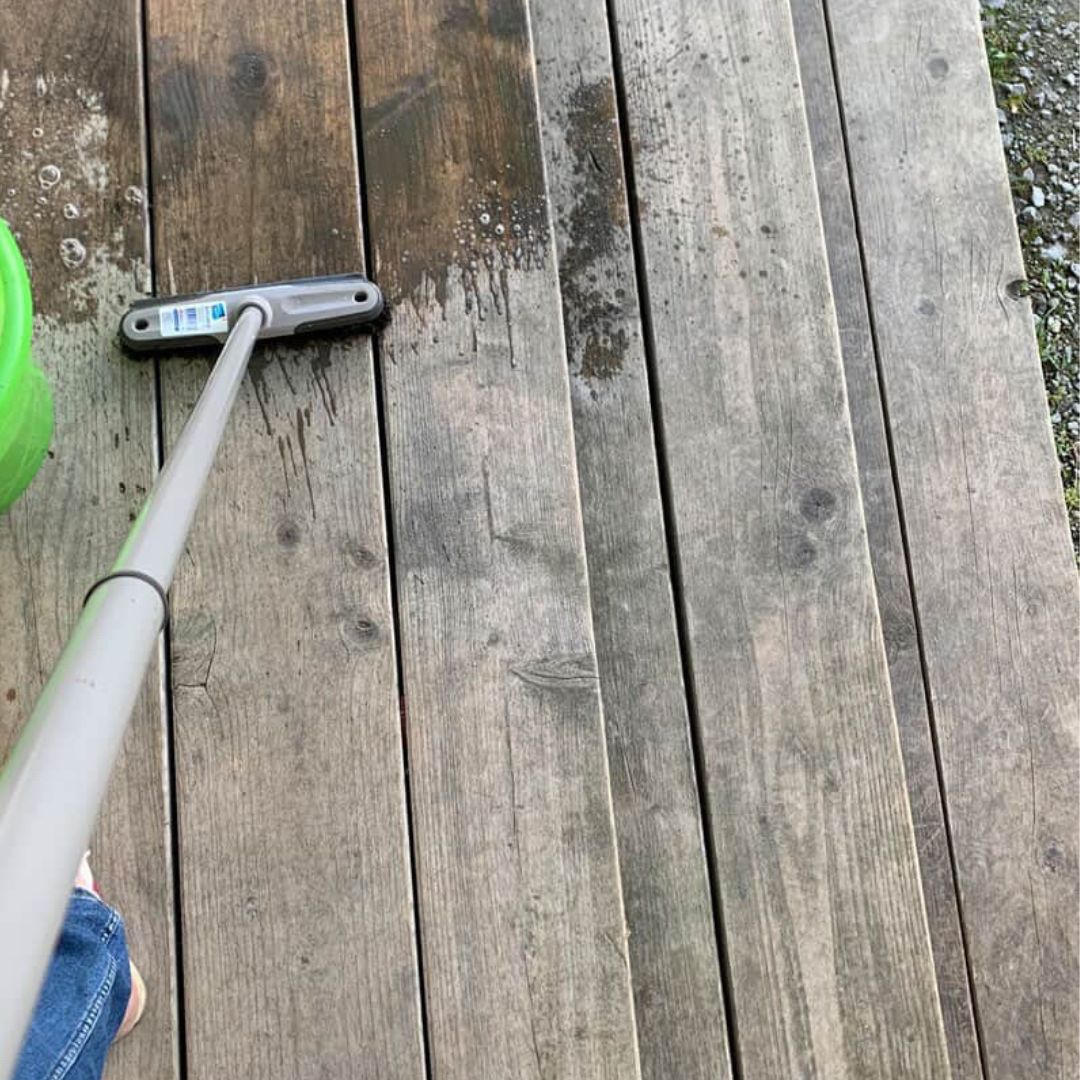
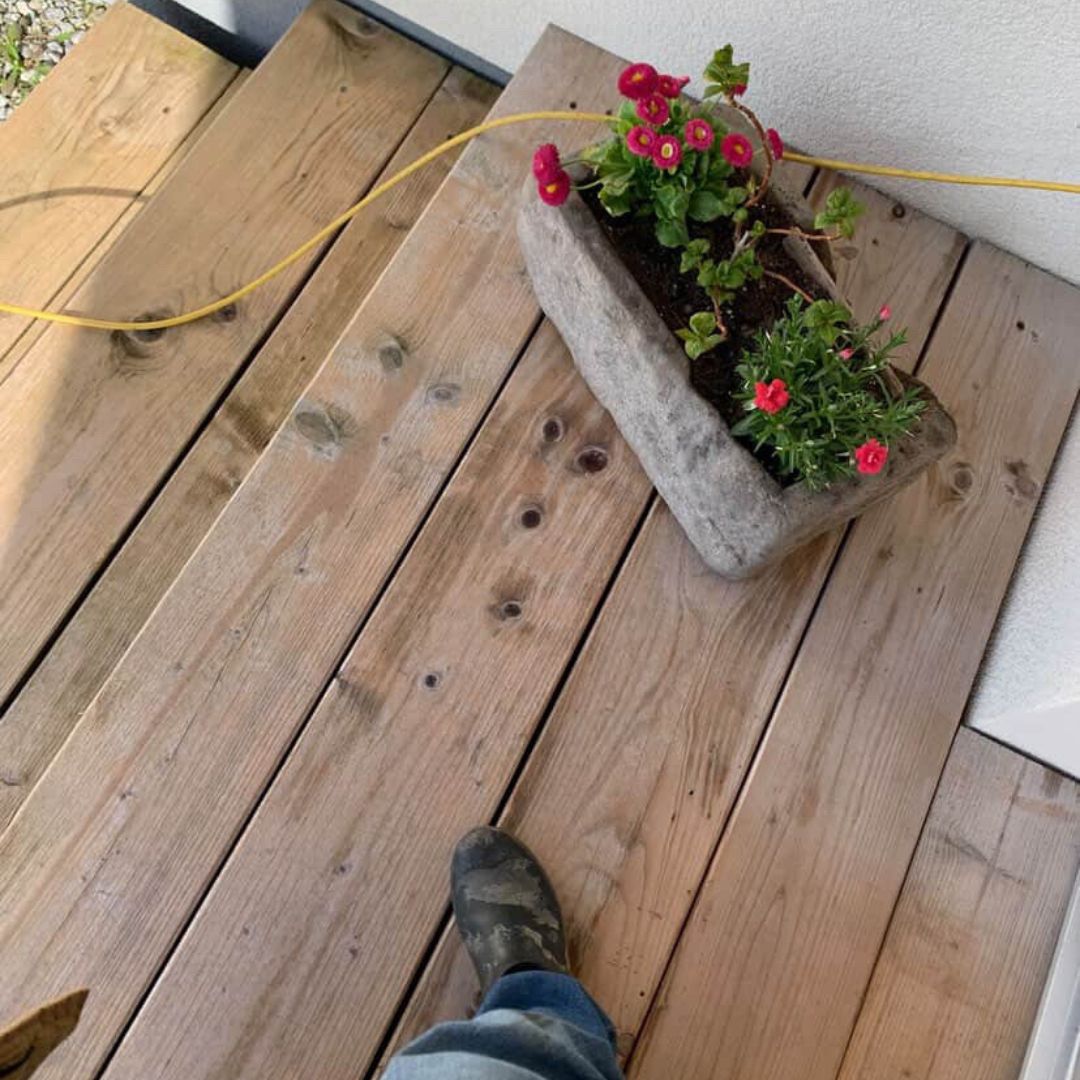
Thank You Petra for sending us before-and-after pictures of you terrasse in Berlin!

Before

After
In Short (more details below)
A three steps program for your terrace
CLEAN
Start by sweeping the surface to remove loose dirt.
Mix warm water with PATAHOLM Såpa and scrub thoroughly using a stiff brush to remove embedded dirt. Rinse off.
TREAT
Mix Såpa with cold water and start scrubbing with a soft brush. Continue until the wood no longer absorbs more - this is when you get the best result.
ENJOY
Let the soap dry into the surface. You can now enjoy a smooth, soft terrace that will develop a naturally beautiful grey patina over time.
How much do you need?
Coverage is difficult to calculate, as it depends on the material, the condition of the surface, and any previous treatments. As a general guideline, about 0,5 liter per 30 m² is a reasonable estimate.

How to soap treat a wooden terrasse
- Prepare the surface
Brush off loose dirt. Sweep and lightly rinse the terrace. - Mix the solution
Add 1–2 tablespoons of linseed oil soap per liter of warm water.
For dry or weathered wood, use a slightly stronger mix. Let it sit for a few minutes to soften the surface. - Scrub along the grain
Dip a brush into the solution and scrub thoroughly, following the direction of the wood grain. A light lather will form — this is expected. - Remove dirty water
Rinse or brush away the dirty soap solution. - Final treatment (do not rinse)
There are different ways to do this and Swedish families all have their preferred technic.
One way is to prepare a fresh solution from the rest of the såpa (ca 3-4 dl/ 25m2). Here you want the såpa solution to be more concentrated. Apply it evenly and leave it on the surface. Scrub it in lightly and let it dry.
Another way to do this step is to spray the solution on the terrace.
Another third way is to simply roll on concentrated såpa on the WET terrace. It is very important that the terrace is wet - never put såpa on dry wood!
Do not rinse. Let it dry naturally.
The remaining soap helps maintain the wood and contributes to a more even, protected surface over time.
- Repeat regularly
With repeated use, a subtle protective layer builds up. The wood becomes smoother, less prone to drying, and easier to maintain.
Stockholm
CLEANING AT LINDAS HOME
My friend Linda and I did a little test on her terrasse in Stockholm. The wood had not been treated or cared for in years and was really dry.
All we did was a quick scrub on three planks to to check the difference.
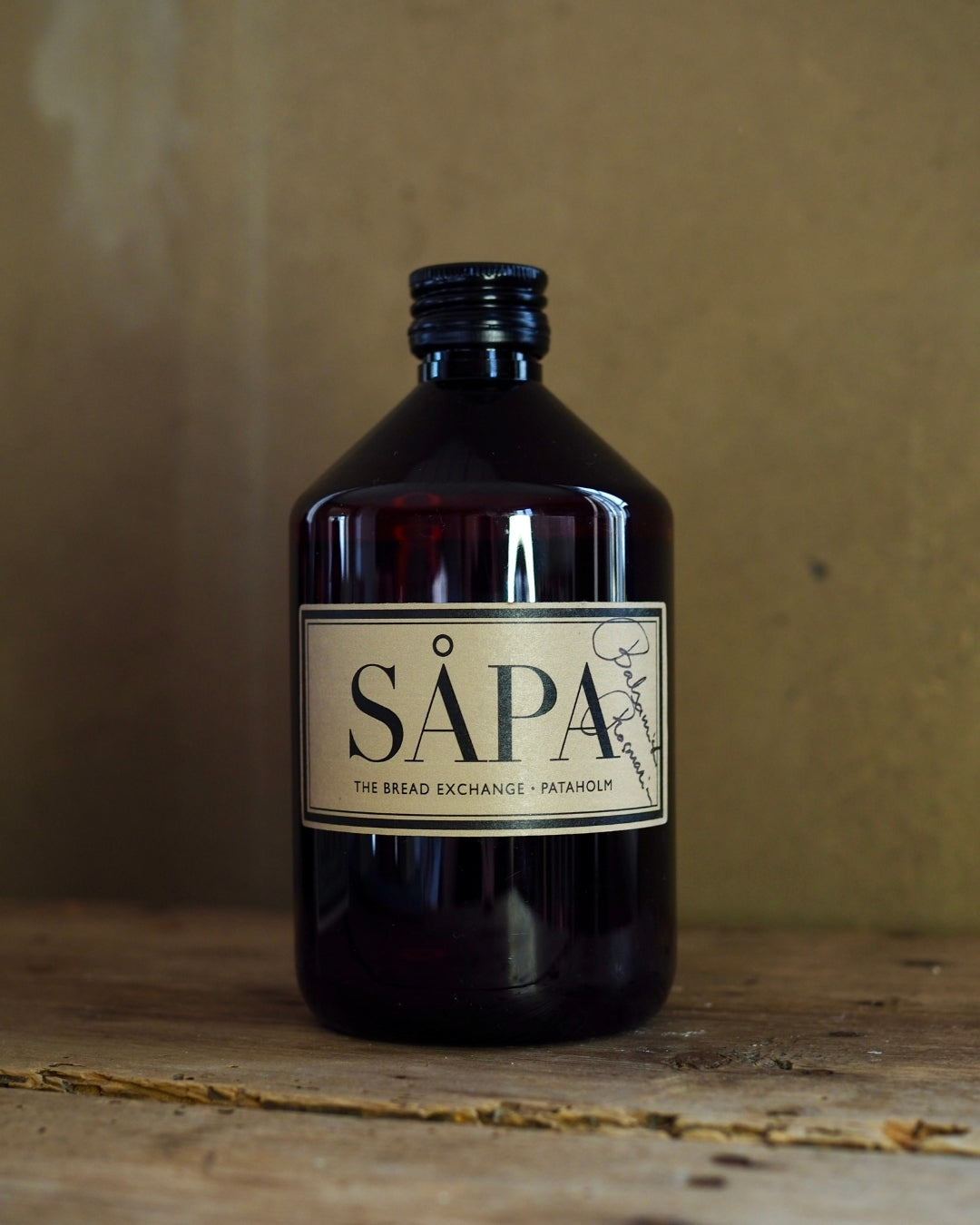
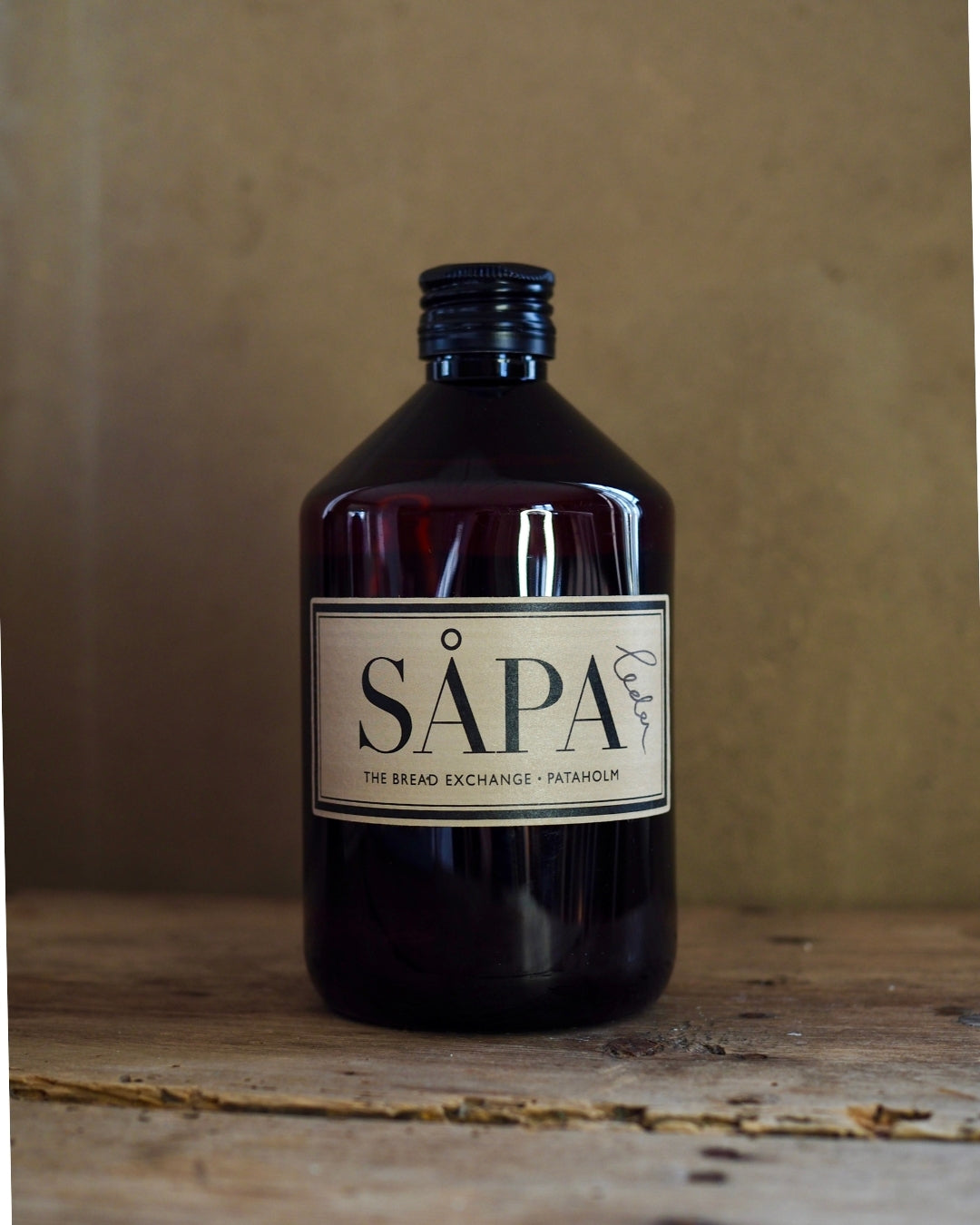
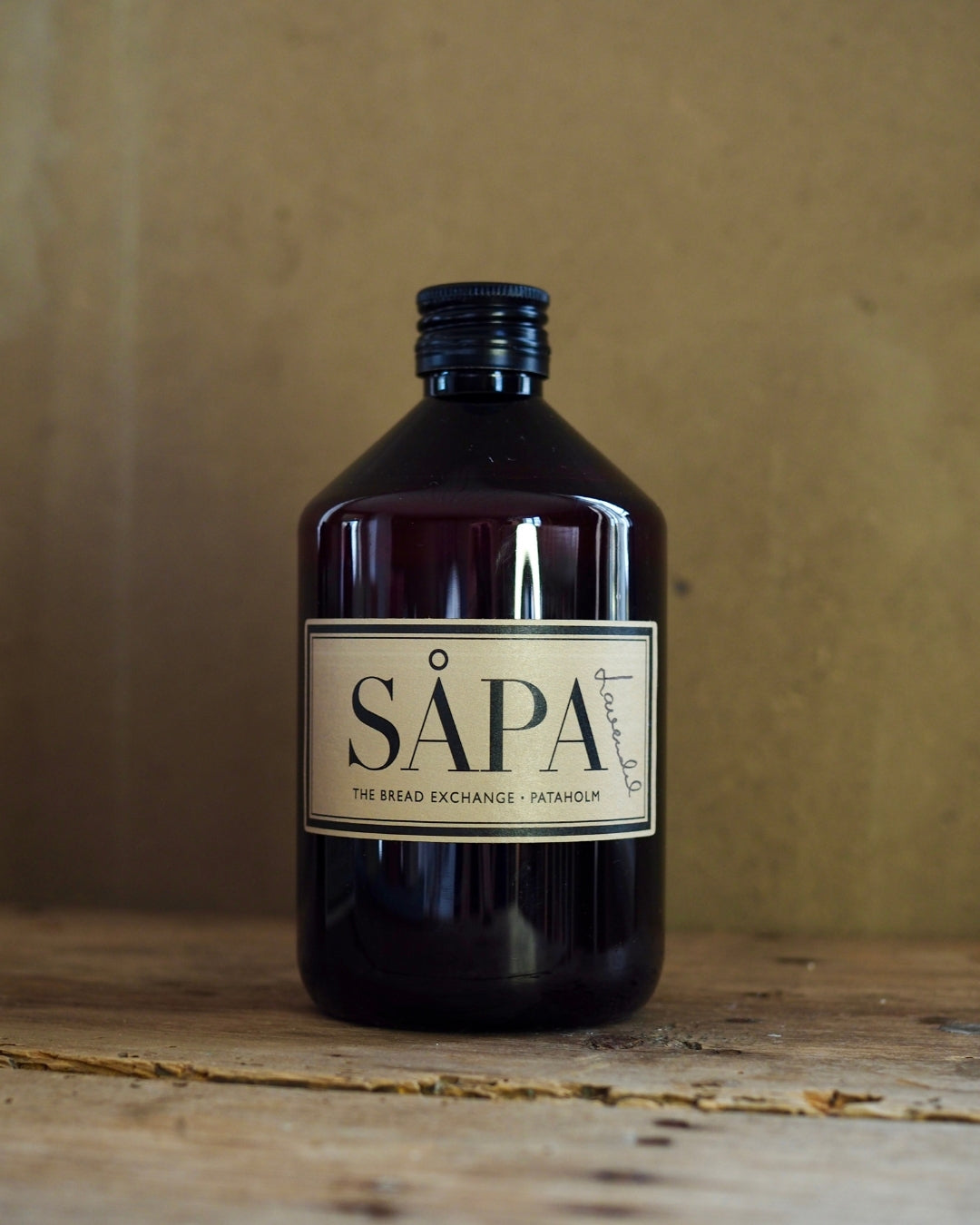
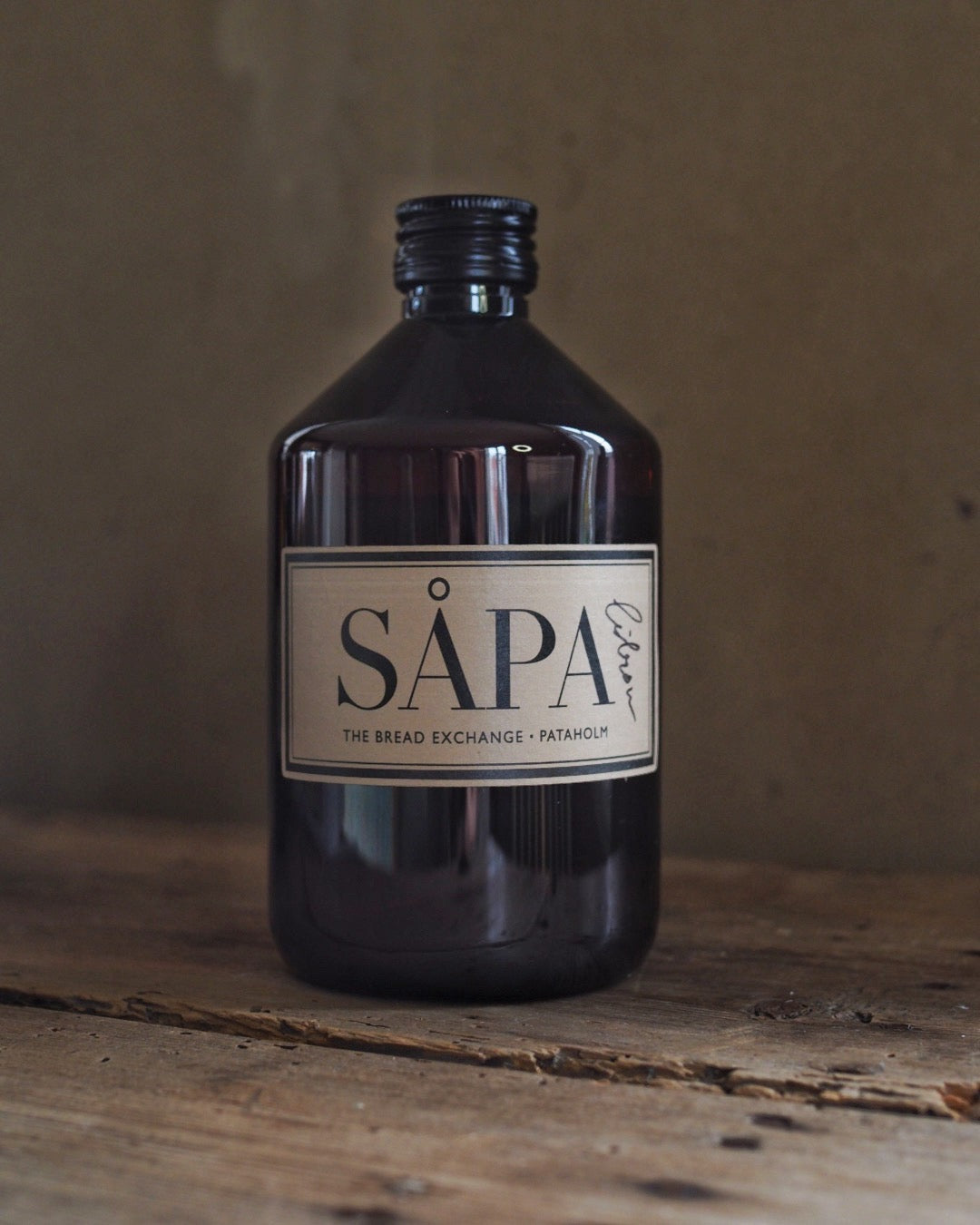
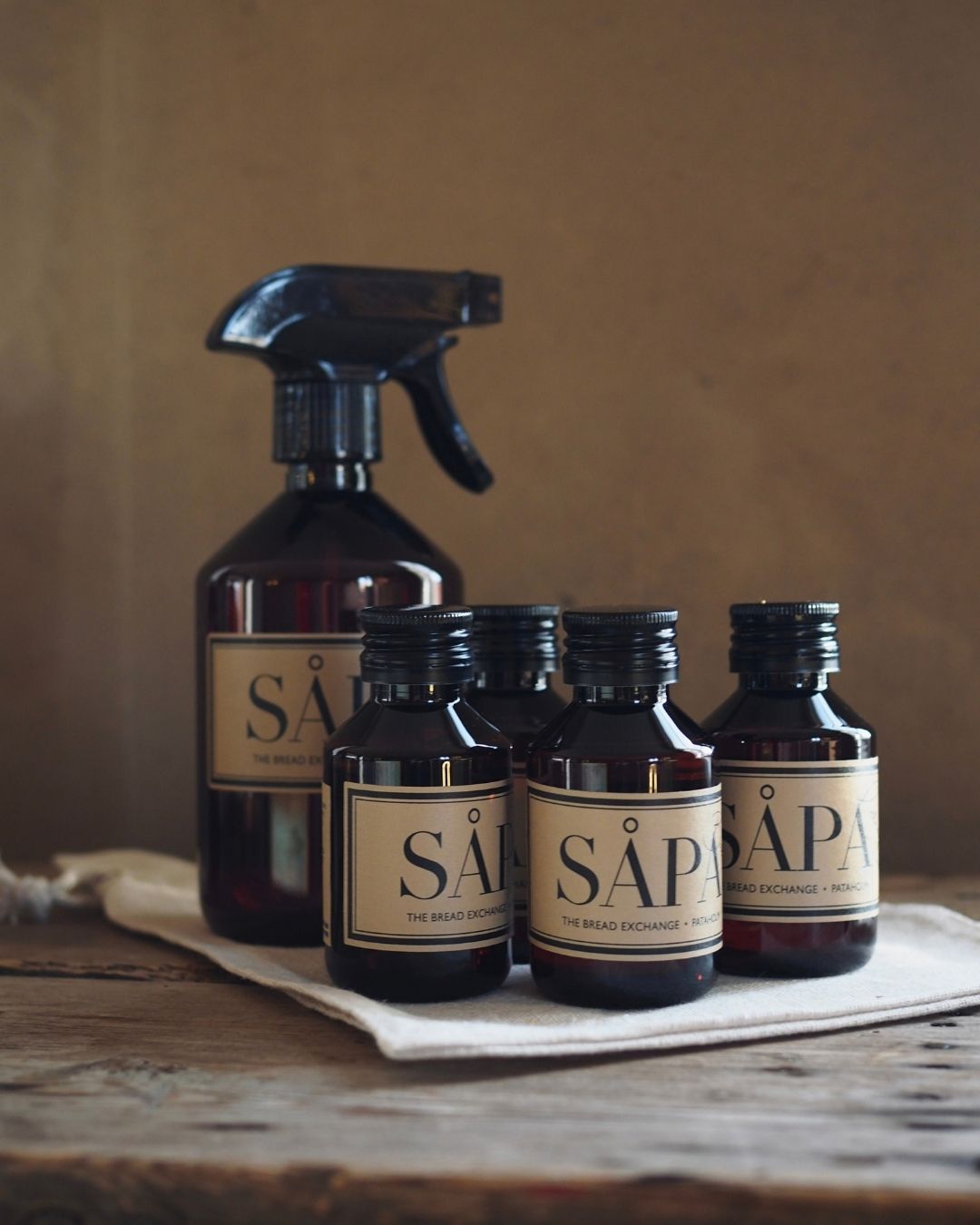
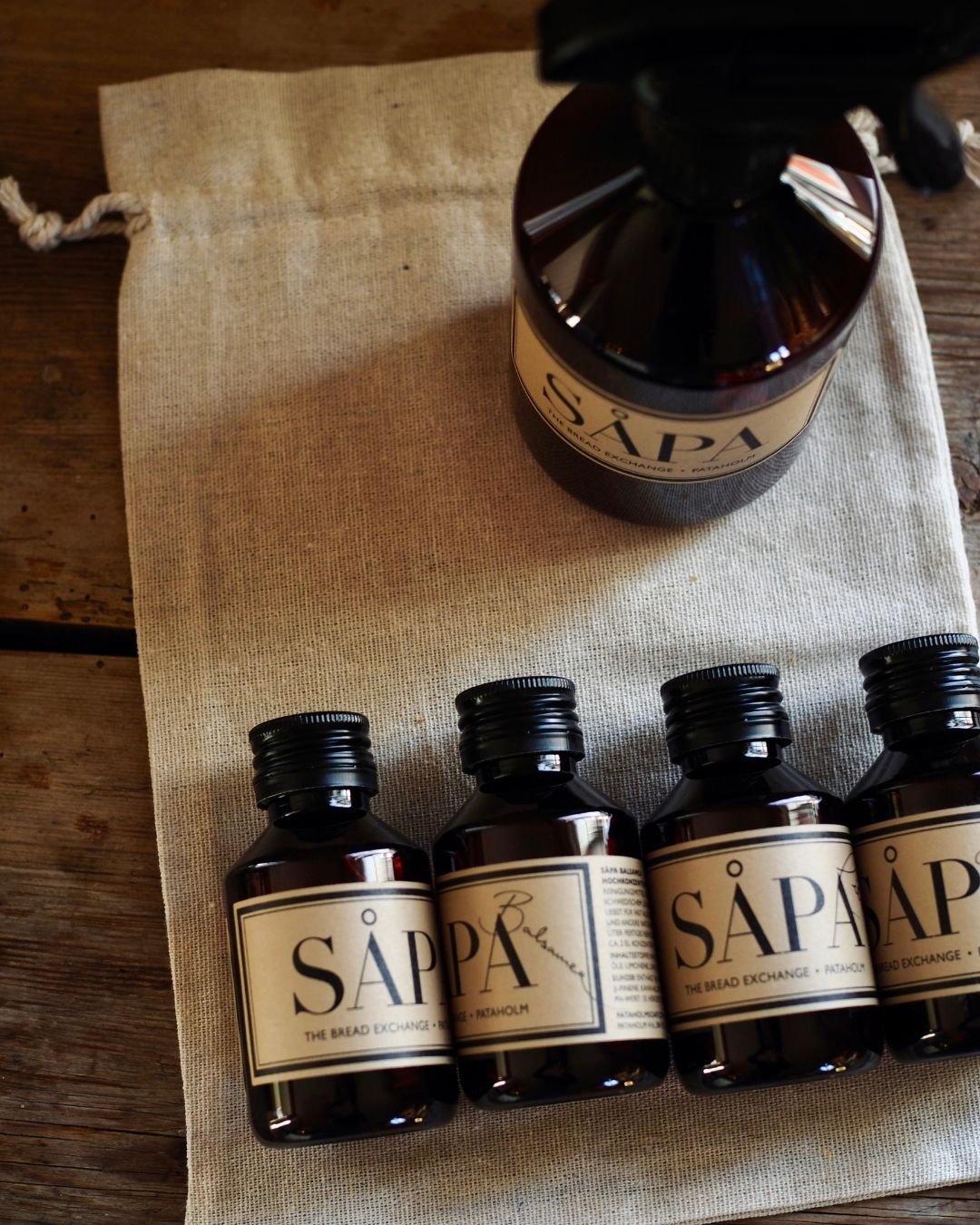
We used the unscented Såpa from Pataholm. You can find it here in 500ml bottles. We also have the same product in a 2,5L. That one can be found here.
Still feel unsure how to do it?
Contact us!
Linseed oil soap for floors